
US Withdrawal From Iraq
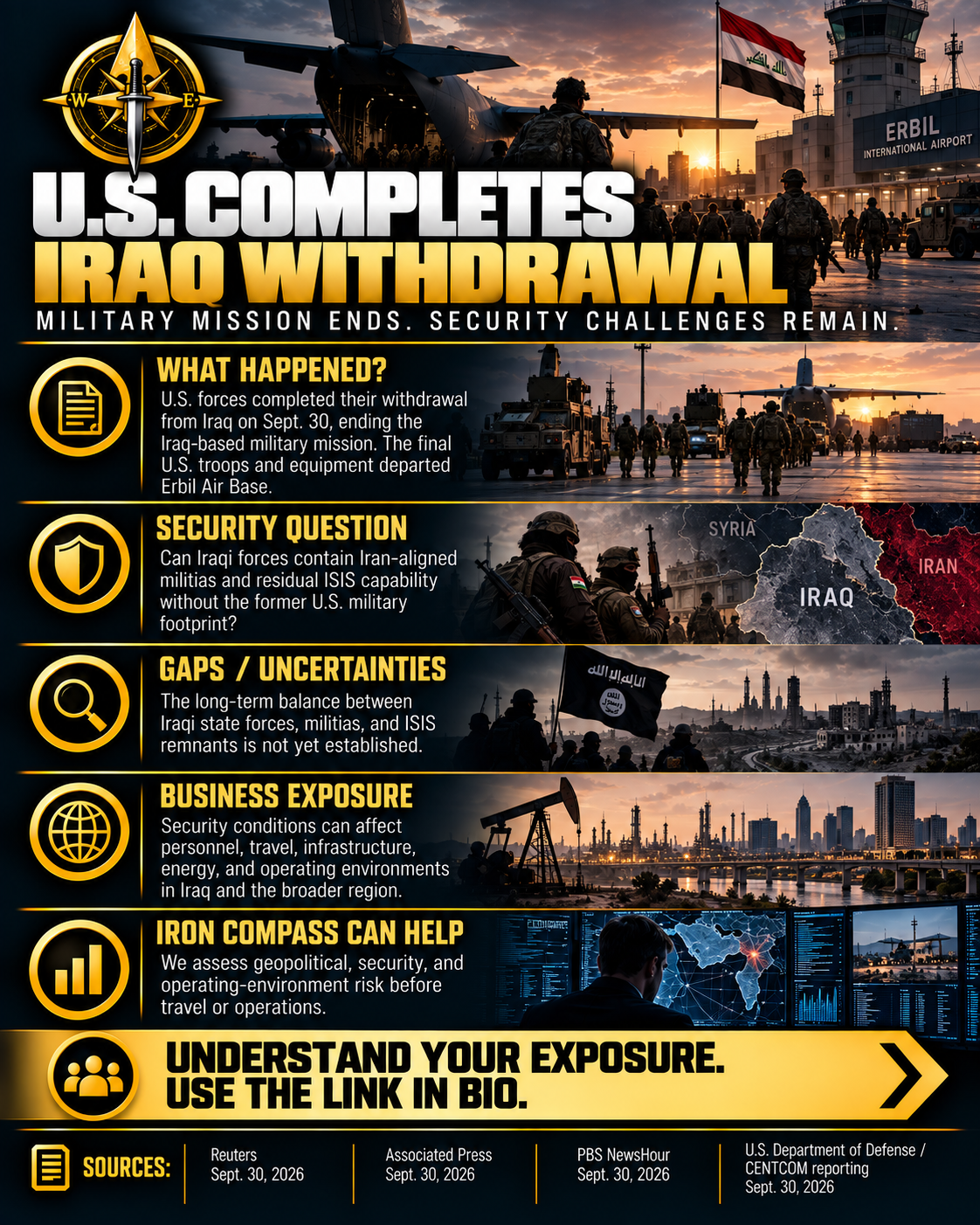
U.S. COMPLETES IRAQ WITHDRAWAL: A NEW SECURITY ENVIRONMENT
The United States has completed the withdrawal of its remaining military forces from Iraq, ending the U.S.-led Operation Inherent Resolve mission there after more than a decade of operations against ISIS. The final departure from Erbil marks a significant change in the regional security environment, although Washington is expected to maintain broader bilateral security relationships with Iraq. Iranian-aligned groups have portrayed the withdrawal as a victory, while Iraqi officials have emphasized increased national sovereignty.
The immediate security question is whether Iraqi forces can manage the competing pressures posed by Iran-aligned armed groups and residual ISIS networks without the previous U.S. military footprint. Reuters reports that Iraqi security officials remain concerned about ISIS sleeper cells, while Iran-aligned groups could gain additional influence over Iraq's security and political environment. The extent to which Iraqi institutions can balance these pressures remains uncertain, making developments in militia activity, ISIS operations, and Iraqi counterterrorism capabilities important indicators to monitor.
For businesses operating in or connected to Iraq, the changing security environment can affect personnel movement, travel, infrastructure, energy operations, supply chains, and investment decisions. Iron Compass helps organizations assess geopolitical and operating-environment risks before they affect people or operations.
SOURCES
Reuters — September 30, 2026 — Joy mixed with fear as US forces quit Iraq leaving potential security vacuum Reuters
Reuters — September 29, 2026 — US forces exit Iraq after two decades, leaving opening for Iran Reuters
Reuters — September 9, 2026 — Why is Iraq unable to disarm Iran's militia allies? Reuters
PBS NewsHour — September 30, 2026 — U.S. military says its withdrawal of troops from Iraq is complete PBS NewsHour