
G7 MOVES TO STABILIZE ENERGY MARKETS
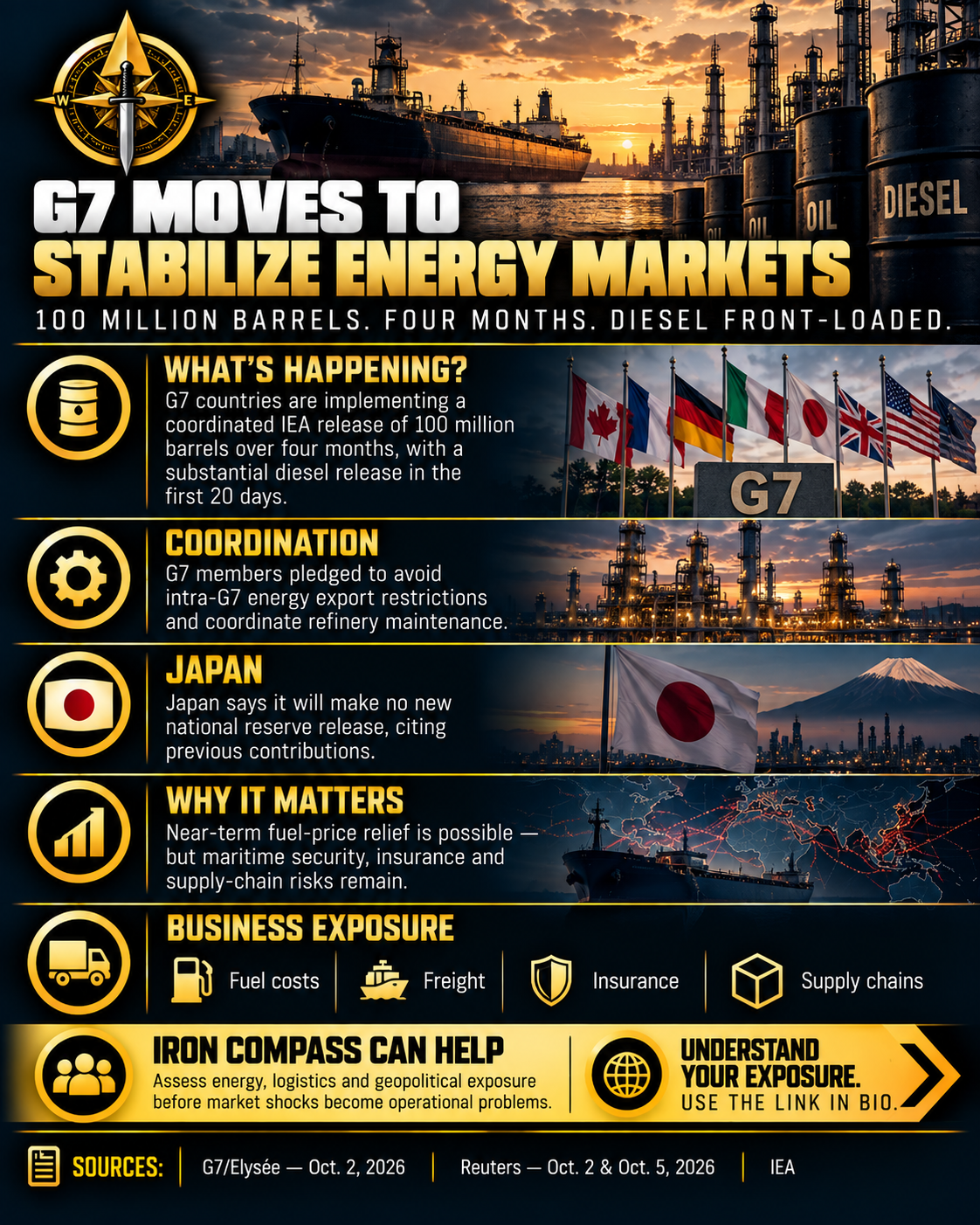
The G7 has begun implementing a coordinated energy-reserve release of 100 million barrels through the IEA over four months, with a substantial volume of diesel front-loaded into the first 20 days. The agreement also commits G7 members to avoiding intra-G7 energy export restrictions and coordinating refinery maintenance to reduce additional supply disruptions.
The move marks a shift from monitoring the energy shock toward active government management of supply and price pressure. However, the scale of genuinely additional supply remains uncertain. Japan has said it will not make another national reserve release, citing contributions it has already made, while the G7 statement explicitly accounts for commitments already fulfilled.
For businesses, the release could provide near-term relief in fuel markets, particularly diesel, but it does not eliminate the underlying security problem. Maritime disruptions, shipping insurance, freight costs and supply-chain exposure remain significant. Companies dependent on energy-intensive operations or international logistics should track both physical supply conditions and government interventions as the situation develops. Iron Compass helps businesses translate geopolitical and energy-security developments into operational risk.
SOURCES
Reuters — October 2, 2026; October 5, 2026 Reuters
G7 Leaders’ Statement on Global Energy Security and Market Stability — October 2, 2026 G7 Information Centre
IEA — Strategic oil-stock release coordination
Elysée / French Presidency — October 2, 2026 G7 Information Centre