
U.S. Midterm Elections: Implications for National Security, Congressional Oversight, and Foreign Policy
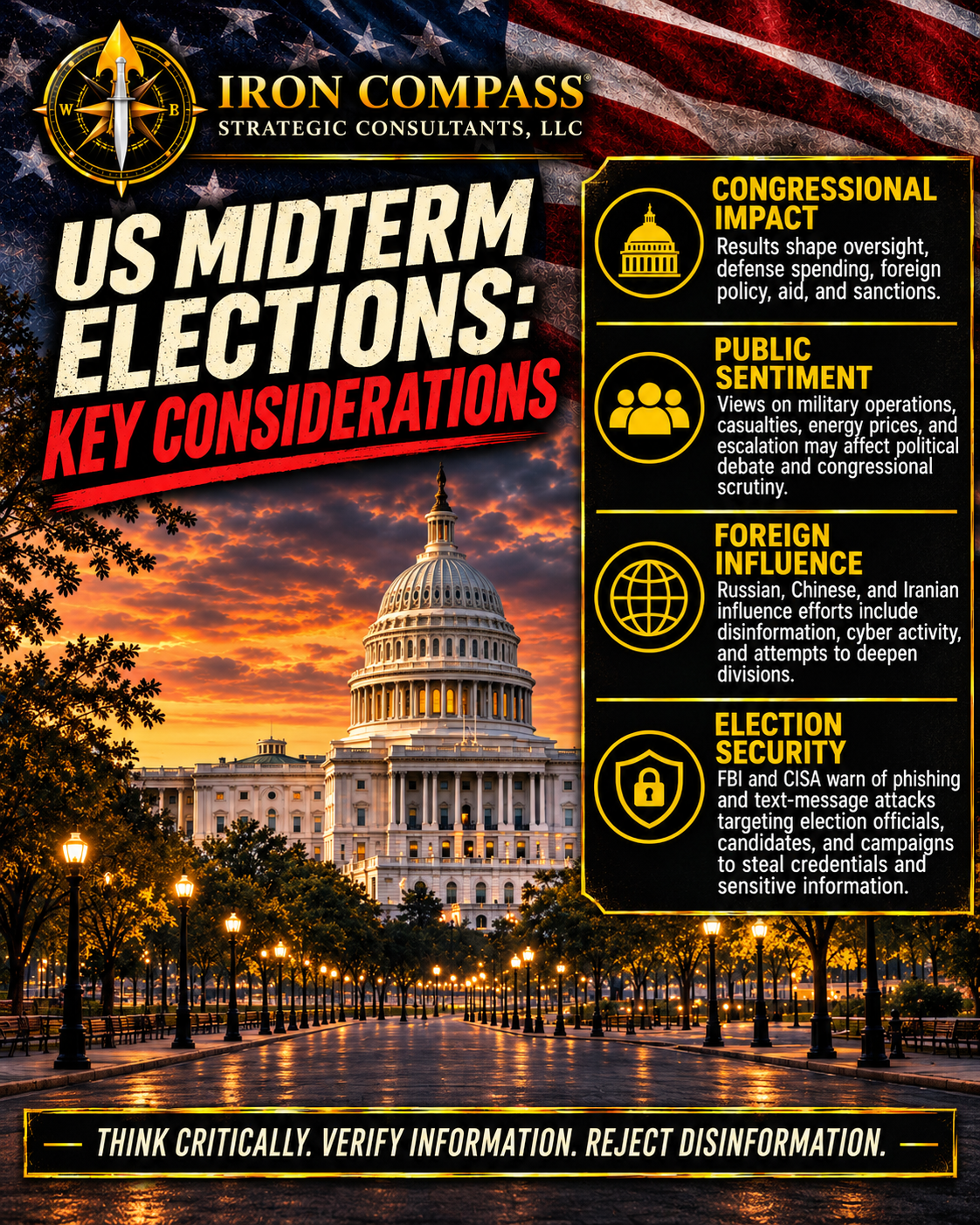
The 2026 U.S. midterm elections represent an important political and institutional turning point, with implications extending beyond the balance of power in Congress. Elections determine control of the House of Representatives and Senate, influencing the legislative agenda, congressional oversight, federal spending, and the direction of domestic and foreign policy. Changes in congressional leadership can affect defense appropriations, military assistance to foreign partners, economic sanctions, intelligence oversight, and diplomatic priorities. Although the president retains substantial executive authority, congressional control influences the funding, authorization, and oversight mechanisms that shape the implementation of national security policy. The November 3 elections are therefore particularly significant against a backdrop of international conflict, strategic competition with China and Russia, tensions involving Iran, and uncertainty surrounding U.S. foreign commitments. The resulting political environment will help define the relationship between the executive and legislative branches during the final two years of the presidential term.
Public sentiment represents an important dimension of the elections. Economic conditions, inflation, energy prices, immigration, military operations, and overseas casualties can influence voter priorities and perceptions of government performance. In particular, public attitudes toward military engagements and foreign assistance can create political pressure surrounding defense spending, continued support for international partners, and decisions involving escalation or diplomatic negotiations. These domestic considerations have implications for U.S. credibility abroad. Allies and strategic partners may interpret election outcomes and subsequent policy debates as indicators of the durability of American commitments, while competitors may view domestic political divisions as opportunities to challenge U.S. influence. Congressional disagreements over appropriations, foreign assistance, sanctions, and military authorities could also introduce uncertainty into long-term strategic planning. However, election outcomes do not automatically translate into immediate policy changes, as institutional constraints, bipartisan coalitions, executive authority, and existing international commitments continue to shape government decisions.
Foreign influence and disinformation remain significant considerations within the broader electoral environment. Russia, China, Iran, and Cuba have demonstrated interest in influencing American public discourse and exploiting existing political divisions. Influence activities can include fabricated news content, manipulated imagery, artificial intelligence-generated audio and video, coordinated social media amplification, and narratives designed to undermine confidence in democratic institutions. These efforts do not necessarily seek to support a particular candidate; they may instead aim to deepen polarization, weaken confidence in election administration, or reduce public trust in government. The 2026 threat environment also includes cyber activity targeting election officials, candidates, and political organizations. An October 16 FBI and CISA advisory specifically identified phishing and text-message attacks intended to steal credentials and sensitive information, with increasingly sophisticated AI-assisted techniques making fraudulent communications more convincing. Importantly, foreign influence operations and cyber intrusions targeting political organizations are distinct from compromising vote-counting systems, and evidence of one should not be interpreted as proof of the other.
The broader significance of the 2026 midterms lies in the relationship between domestic political stability and America's ability to sustain its international commitments. Congressional control will influence the direction of defense funding, foreign assistance, intelligence oversight, sanctions policy, and executive accountability, while public sentiment will continue to shape the political costs associated with military operations and overseas engagement. For foreign governments, the election provides an indication of the domestic political environment surrounding U.S. strategic priorities, although actual policy continuity or change will depend on subsequent legislative and executive decisions. For competitors, periods of political division and institutional disagreement can create opportunities for influence operations and diplomatic maneuvering.
The central strategic consideration is that the midterm elections will shape not only the domestic political balance of power, but also the legislative environment, policy flexibility, and perceived consistency of U.S. national security commitments abroad.
SOURCES
FBI / Internet Crime Complaint Center — Cyber Threat Actors Use a Variety of Techniques to Target Election and Campaign Officials (October 16, 2026)
Reuters — Six Things to Watch as U.S. Voters Decide Control of Congress (November 2, 2026)
Brookings Institution — The Midterm Effect: What the 2026 Election Could Mean for Public Policy
Office of the Director of National Intelligence — 2026 Annual Threat Assessment
Just Security — Foreign Threats to U.S. Elections Are Maturing Faster Than the Defenses to Counter Them (October 20, 2026)
Federal Election Commission — Election and Voting Information